Why a Pizza Restaurant Is More Than Just a Place to Eat


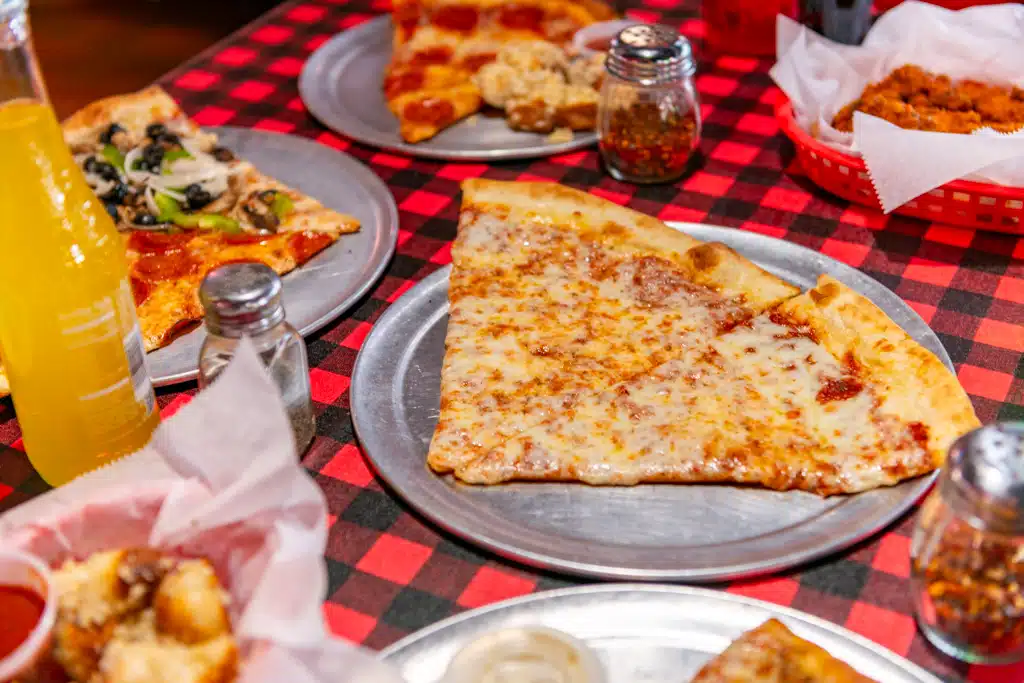
A good pizza restaurant feeds people. A great one does something harder to measure and much more valuable. It creates routine, memory, and trust. It becomes the place where a family lands after a late soccer game, where a couple has their first low-pressure date, where coworkers stop pretending they are only discussing deadlines, and where a neighborhood quietly learns each other’s names.
That is why people who reduce a pizza restaurant to flour, cheese, sauce, and oven heat miss the point. The food matters enormously, of course. Bad pizza will not earn loyalty for long. But the places that last, especially in crowded markets where diners have endless options, usually offer something beyond dinner. They become part of the social architecture of a community. They are dependable without feeling mechanical. They are familiar without becoming stale.
Anyone who has spent serious time in restaurants sees this quickly. The strongest operators are not just making pies. They are managing atmosphere, timing, hospitality, labor, cost pressure, customer psychology, and local identity, all at once. The dining room may look casual, but the role it plays in people’s lives is surprisingly complex.
The first restaurant many people truly know
For a lot of people, the pizza restaurant is one of the earliest restaurant experiences that feels accessible rather than ceremonial. Fine dining can intimidate. Fast food can feel transactional. A pizza place often sits in the middle. It invites people in without demanding that they perform.
Children understand it immediately. Teenagers claim it as one of their first independent hangouts. Parents appreciate that they can feed a group without turning dinner into a negotiation. Grandparents like that the meal is generous, familiar, and easy to share. That broad appeal is not accidental. Pizza, at its best, removes friction.
This matters more than it seems. Restaurants that become woven into people’s routines often do so because they make social life easier. Nobody needs a long explanation before agreeing to meet at a pizza restaurant. The format does half the work. People can split a large pie, add a salad, maybe an appetizer, and stay for 45 minutes or two hours depending on the occasion. That flexibility is rare. Many concepts force a certain pace or budget. Pizza does not.
There is also an emotional memory attached to it. Ask people about the pizza place they loved growing up and they usually describe more than the food. They remember arcade machines in the corner, vinyl booths, a server who always brought extra napkins without being asked, or the smell that hit when the door opened in winter. They remember the Friday night feeling. Restaurants spend fortunes trying to create brand loyalty. A neighborhood pizza restaurant often earns it through repetition, warmth, and ordinary consistency.
The menu is simple, the operation is not
From the outside, pizza can look easy. Dough, sauce, cheese, toppings, bake, slice, serve. In practice, a serious pizza operation is one of the clearest examples of how simplicity on the plate can require relentless discipline behind the scenes.
Dough alone is a daily lesson in judgment. Temperature, humidity, flour absorption, fermentation time, mixing speed, storage, and handling all affect the final product. A dough that behaved beautifully on Tuesday may need a different touch on Friday if the weather turns. The line between airy and slack, or crisp and dry, is narrow. Good operators know their dough the way bakers know their bread. They watch it, not just the clock.
Then there is the oven. Deck ovens, conveyor ovens, wood-fired ovens, and gas-fired hearths all shape the result differently. Each system demands trade-offs. A wood-fired oven can produce stunning character and char, but it also requires careful fire management and can be less forgiving during a rush. Conveyor systems improve throughput and consistency, which is why many high-volume shops rely on them. A deck oven gives control but asks for skilled hands and attention. None of these choices is purely romantic or purely financial. They affect labor, ticket times, menu range, and customer expectations.
Topping management sounds mundane until margins get tight. Cheese prices can swing sharply. Fresh basil bruises quickly. Mushrooms release water. Pepperoni cups nicely at one thickness and lies flat at another. If prep is sloppy, the pie bakes unevenly. If portions drift, food cost creeps up a point here and a point there until profitability quietly disappears. Operators who survive are often the ones who respect tiny details. The customer sees a comforting, familiar dish. The business sees hundreds of small decisions that have to go right every day.
That complexity is part of why a pizza restaurant can become such a reliable institution. When the operation is well run, guests feel it even if they cannot name it. Orders arrive at the right pace. The crust tastes the same on a busy Saturday as it did on a quiet Wednesday. Staff are calm instead of frantic. Reliability builds confidence, and confidence is the foundation of habitual dining.
A built-in lesson in hospitality
Hospitality at a pizza restaurant looks different from hospitality at a tasting menu restaurant, but that does not make it less demanding. In some ways, it is harder because the service must feel easygoing while still being sharply competent.
Guests in pizza restaurants often arrive in mixed groups with mixed needs. One person wants extra olives, another is dairy-free, two children are hungry now, one friend is running late, and someone at the table wants to watch the game while another wants to catch up. The room can be noisy, the tables turn at uneven speeds, and takeout tickets are stacking up while dine-in guests still expect attention. Staff have to move quickly without making the experience feel rushed.
The best teams know how to read a table within seconds. They can tell whether a family needs efficiency, whether a date night needs space, or whether a regular wants their usual with minimal conversation because they had a hard day. That is real hospitality. It is not scripted cheerfulness. It is observation, memory, and timing.
I have seen pizza places earn lifelong customers through very small moments. A server notices that a parent is struggling with a stroller and clears space before being asked. A manager sends out a smaller plain pie for children first because the kitchen knows the adults are ordering a specialty pie that will take longer. A counter employee remembers that a customer likes their slices reheated a little longer for extra crispness. None of this makes headlines. It creates attachment.
The economics force creativity and discipline
There is a reason so many entrepreneurs look at pizza as a viable restaurant concept. Compared with some formats, it can offer strong volume potential, broad audience appeal, and multiple revenue streams through dine-in, takeout, delivery, catering, and late-night service. But that does not make it easy money.
A pizza restaurant lives in a narrow band between value and margin. Customers often compare prices closely because pizza is familiar. They know roughly what a large pie should cost in their area. At the same time, ingredient quality, rent, labor, utilities, insurance, packaging, and third-party delivery fees all push expenses upward. Raise prices too aggressively and guests feel it immediately. Hold them too low and the business starts absorbing costs it cannot sustain.
This is where the strongest restaurants distinguish themselves. They make strategic choices rather than trying to be everything to everyone. Some keep the menu tight to protect execution and inventory. Some lean into lunch slices for office workers because that daypart can smooth revenue. Some design family bundles that simplify ordering and increase average ticket size. Some limit delivery radius to preserve food quality and driver efficiency. Thoughtful restraint often beats endless expansion.
There is also a practical truth that many diners overlook. A busy Friday night can look lucrative, but peak periods also expose every weakness in the operation. If the kitchen gets buried, ticket times jump. If delivery runs long, pizzas arrive steamed and tired. If staffing is thin, the dining room mood sours quickly. Revenue only matters if the system can absorb demand without damaging the guest experience. The real skill lies in matching ambition to capacity.
A local business with a public role
Unlike many retail spaces, a pizza restaurant is porous. People pass through it for reasons that go beyond the menu. Youth teams celebrate wins there. Schools hold fundraisers. Local bands hang flyers on the community board. Political candidates shake hands there during small-town campaigns. Someone grabs two pies for a grieving neighbor. A church group places a bulk order after an event. The restaurant becomes a node in local life.
That civic role is easy to underestimate. National chains can provide consistency and convenience, and many do it well. But an independent pizza restaurant often reflects the neighborhood in a more specific way. The owner might sponsor the little league jerseys. The walls might feature old photos from the area. The staff may know which high school is playing on Friday and which block is dealing with road construction. These details create belonging.
Even the menu can become a quiet record of local taste. In one city, diners may swear by thin crust with sausage and giardiniera. In another, they may want thick pan pizzas with caramelized edges. Coastal markets may support lighter, vegetable-driven specialty pies. College towns often reward late hours and giant slices. A pizza restaurant that listens to its audience without losing its identity can become a very accurate portrait of place.
That connection becomes most visible during hard times. When storms knock out power, when a neighborhood loses a landmark business, when families need affordable group meals, the familiar pizza place often steps forward. Operators discount trays for volunteers, donate food, or simply stay open when people need somewhere normal to go. Those choices matter. They tell customers that the relationship runs both ways.
Why pizza brings people together so easily
Sharing food changes the emotional temperature of a room. Pizza, more than many dishes, is built for sharing. It arrives in the center, not as a private plate but as a common meal. People reach, negotiate slices, trade crust preferences, and talk while serving each other. The format encourages interaction.
This may sound obvious, but it has real social consequences. In business settings, pizza lowers formality. In families, it reduces the burden on whoever would otherwise cook and clean. For groups with varying appetites or budgets, it creates a practical middle ground. Few foods move this smoothly between children’s birthday parties, sports banquets, office lunches, and casual dates.
Its adaptability helps. A pizza restaurant can cater to a wide range of preferences without turning ordering into a high-stakes event. Someone wants meat lovers, someone wants mushrooms and onions, someone wants gluten-free crust if available, someone just wants a slice and a soda. The meal can flex around the group. Not every concept can do that.
There is also something psychologically comforting about pizza’s predictability. People like novelty in theory, but on stressful days many want a meal that asks little of them. A good pizza restaurant can be the answer to decision fatigue. Guests know they will find something satisfying. That reassurance is part of the product.
The room itself matters
Design in a pizza restaurant is rarely discussed with the seriousness it deserves. Yet layout, lighting, acoustics, and sightlines influence the experience almost as much as the food.
A room that lets guests see the oven and the pizzaiolo at work builds appetite and trust. The smell of baking dough and browning cheese is one of the most effective forms of marketing any restaurant has. Booths create privacy and comfort for families. Communal tables can energize a busy urban shop. Hard surfaces may look stylish but can make a dining room punishingly loud, especially when it is full of children and sports fans. Warm lighting can make an inexpensive dinner feel generous. Bad seating can make a good meal feel rushed.
Even the counter matters. In a slice shop, the glass display and the speed of service become part of the theater. In a full-service pizza restaurant, the path from host stand to table and from kitchen to dining room affects rhythm in ways guests feel instinctively. If pickup customers clog the entrance, dine-in hospitality suffers. If the bar is well placed, solo diners feel welcome instead of stranded. Good operators think about these flows because they understand that comfort is cumulative.
The trade-offs between tradition and adaptation
Pizza inspires strong opinions, often for good reason. People attach identity to style. Thin crust versus deep dish, New York slice versus Neapolitan, classic toppings versus seasonal experimentation. A pizza restaurant has to decide where it stands, and that choice carries consequences.
Leaning hard into tradition can build authority. Customers respect a place that knows exactly what it is and executes with conviction. But rigid adherence to tradition can also limit audience or make it harder to respond to dietary shifts and market demand. On the other side, endless innovation can attract attention but weaken the core product if the kitchen starts chasing novelty instead of consistency.
The best restaurants usually find a stable center. They honor the fundamentals, dough, bake, balance, texture, while allowing enough flexibility to stay relevant. Maybe that means offering a few seasonal pies built on sound technique rather than gimmicks. Maybe it means keeping a beloved red-sauce classic beside a white pie with roasted vegetables. Maybe it means serving natural wine in a neighborhood that used to expect only beer, but doing so without making regulars feel displaced.
That judgment is harder than it looks. Restaurants can alienate loyal guests by changing too much, yet they can also stagnate by changing too little. A pizza restaurant that lasts learns how to evolve in small, legible steps.
Technology changed the business, not the purpose
Online ordering, third-party delivery, kitchen display systems, and loyalty apps have transformed how pizza restaurants operate. Convenience is no longer optional. If a guest wants to reorder the same Friday night meal in 20 seconds from a phone, most businesses need to support that behavior.
Still, technology solves only part of the equation. It can streamline order flow, reduce phone errors, and generate useful sales data. It can also create new problems. Third-party delivery platforms can squeeze margins hard, confuse accountability when orders go wrong, and distance the restaurant from the guest relationship. Packaging that travels well may increase cost. Foods that shine in-house may not survive a 25-minute car ride.
This is where operational judgment matters again. Some pizza restaurants treat delivery as a core competency and build around it with driver staffing, sturdy box design, and menus engineered for travel. Others limit their radius or focus more heavily on pickup and dine-in because they refuse to compromise quality. Neither approach is inherently right. The point is that the business model should support the experience the restaurant wants to be known for.
No app can replace the feeling of being welcomed by name, hearing the oven crackle, and eating a hot slice at the right moment. Technology can widen access. It does not replace the human value at the center.
What customers are really buying
When people choose a pizza restaurant, they are buying more than calories. They are buying relief from cooking, yes, but also predictability, comfort, and a certain kind of social ease. They are buying a place where nobody has to be overdressed or overly careful. They are buying a meal with enough generosity to feel communal. They are buying time together that does not need much choreography.
This is why even excellent home pizza rarely displaces the restaurant experience entirely. Home cooking can be wonderful, but a restaurant changes the responsibility structure. Someone else made the dough, watched the oven, cleaned the pans, stocked the fridge, greeted the group, and reset the table. That transfer of labor matters. So does the public nature of the setting. Leaving home and entering a familiar restaurant can feel like a reset button after a long week.
The strongest pizza restaurant understands this intuitively. It knows that speed matters, but not at the expense of care. It knows that value matters, but cheapness is not the same thing. It knows that style matters, but only if substance supports it. Most of all, it knows that a restaurant earns its place in people’s lives one ordinary night at a time.
A pizza restaurant is more than just a place to eat because eating is only the visible part of what happens there. Under the surface, it is a workshop, a stage, a refuge, a neighborhood commons, and often a family ritual in commercial form. It is one of the few businesses where hospitality, https://dantewuvg198.clearminster.com/posts/what-makes-a-pizza-restaurant-the-heart-of-the-neighborhood memory, economics, and community meet in full view. That is a lot to ask from a room with flour on the counter and boxes by the door. The best ones deliver it anyway.
RUFFRANO'S HELL'S KITCHEN PIZZA Security
385 Main St, Colorado Springs, CO 80911
(719) 390-4355
FAQ About pizza restaurant
Is there a Hell's Kitchen pizza restaurant in Security-Widefield?
Yes. Ruffrano's Hell's Kitchen Pizza has a Security-Widefield location at 385 Main St.
Where can I find pizza delivery in Security-Widefield?
Ruffrano's Security location offers online ordering. Enter your address at checkout to check delivery availability and fees.
Where can I find gluten-free pizza in Security-Widefield?
Ruffrano's menu lists a 12-inch gluten-free option. Call the Security location to confirm availability and ask about shared equipment if cross-contact is a concern.